The Six-Minute Window of the Century
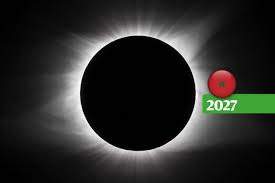
My light meter will be useless when the moon’s shadow hits the Benghazi Corniche at 11:27:43 local time on August 2, 2027. We call it the “Eclipse of the Century” because the celestial mechanics of Saros 136 are offering something greedy: a duration of totality that will not be exceeded until 2114. While the peak shadow lasts 6 minutes and 23 seconds in the remote deserts of Egypt, Benghazi sits as the ultimate urban anchor in the 258-km-wide path, granting observers over six minutes of midday darkness.
There is a gritty irony in this. A region that has spent the last decade defined by fragmentation and “No Travel” advisories is suddenly the most critical geographic coordinate on the planet. For 369 seconds, the world’s focus will shift from the geopolitical friction of North Africa to a hole in the sky, proving that nature has a way of forcing our eyes upward, regardless of the borders drawn in the sand below.
Why Every Second Counts
For a science photojournalist, every tick of the second hand is a frame of data. Benghazi offers between 6 minutes and 9 seconds and 6 minutes and 11 seconds of totality. With a solar altitude of 67.8° at the maximum, we aren’t just looking through less atmosphere; we are witnessing a “natural laboratory” in high definition.
This isn’t just about the “Diamond Ring” effect or Baily’s Beads. The National Solar Observatory (NSO) is eyeing this window to track flare ribbons and the hidden magnetism of the sun’s far side. It is nearly double the average eclipse length, providing the time necessary for complex atmospheric monitoring that usually fails in shorter windows.
“Benghazi offers one of the longest land-based views of the 21st century, a duration not to be exceeded until 2114.”
“Technical Unification” of a Divided Nation
The eclipse is achieving what a decade of diplomacy could not: a functional “technical unification” between the Tripoli-based Government of National Unity (GNU) and the Benghazi-based authorities. While the nation remains bifurcated, the logistical gravity of 100,000 expected visitors has forced a fragile administrative convergence.
The Benghazi-based Libyan Arab Armed Forces (LAAF), under Field Marshal Khalifa Haftar, have traded their usual martial posture for an image of reconstruction and stability. This is underpinned by the 2025 national e-visa system, which saw a 60% increase in visitors by acting as a surprising administrative bridge between rival cabinets. Under the guidance of the National Eclipse Committee, these two sides are coordinating a unified spending framework to ensure the “Eclipse of the Century” doesn’t become a logistical collapse.
“The eclipse has necessitated a fragile administrative convergence, forcing technical cooperation between rival factions to manage the influx of international observers.”
Safety in an Enforced Quiet
Travel to Eastern Libya is not for the faint-hearted, but the “quiet” in Cyrenaica is heavily enforced by the LAAF. Statistics tell one story—fewer than 15 combat-related deaths annually over the past five years—but the field experience tells another. All foreign nationals are required to have a government-appointed security escort, or “tourist police.”
It is a traveler’s paradox. These escorts restrict your freedom to roam, but they provide the ultimate security intel for high-stakes photography. Sometimes the human element is just plain “weird”—I’ve had minders sit on the edge of my hotel bed scrolling through their phones while waiting for me to pack gear. It’s invasive, yet effective. However, the bureaucracy remains rigid: if your passport carries an Israeli stamp, you will be denied entry. Furthermore, all travelers must complete police registration within one week of arrival, a task typically handled by the required tour sponsor.
Chasing the 0% Cloud Cover
In my line of work, weather certainty is the ultimate luxury. I remember the 1999 eclipse in the UK; thousands of people stood in the rain to watch a gray sky turn a darker shade of gray. Benghazi, however, offers a meteorological guarantee backed by 45 years of satellite data: a 0% to 5% cloud cover probability for August.
But “clear” doesn’t mean “easy.” The real enemy here is the aerosol—dust storms that can soften the solar corona into a brown haze. Then there is the 42°C (107.6°F) heat. Camera sensors will scream in this temperature; the pro tip is to drape damp white cloths over your long lenses to prevent the black barrels from cooking the internal electronics.
“Cloud cover for this eclipse is among the lowest I’ve analysed over the last 45 years… Benghazi similarly looks like a very good site.” — Jay Anderson, solar eclipse weather expert.
Ancient Ruins Meet Modern Science
There is a haunting visual juxtaposition in watching Saros 136 from the “Pentapolis”—the five ancient Greek and Roman cities of Cyrenaica. Standing at the UNESCO site of Cyrene or the Byzantine ruins of L’atrun, you see high-tech solar filters and carbon-fiber tripods set against weathered 7th Century BCE limestone.
The University of Benghazi is positioning itself as a bridge between this Hellenistic history and modern atmospheric monitoring. Whether you are shooting the shadow from the massive Haua Fteah Cave or the coastal columns of Ptolemais, the continuity of time is palpable. These ruins have been plunged into darkness by this same celestial cycle for millennia; we are merely the first generation to document it with digital precision.
A Turning Point for the Green Mountain
The 2027 eclipse is more than a 369-second blackout; it is a high-visibility test of Libya’s infrastructure and international legitimacy. By forcing a degree of cooperation between Haftar’s LAAF and the western authorities, the event acts as a catalyst for a tourism resurgence in the “Green Mountain” region that has been dormant for too long.
As the moon’s umbra sweeps over the Mediterranean, it leaves us with one haunting question: Can the overwhelming power of a natural phenomenon momentarily override a decade of human political fragmentation, or is the darkness simply a mask for a divide that remains? In 2027, Benghazi will provide the answer.
